


The padel coach interview that wins: talk about your project, not their CV
Christopher Aguilar interviewed with five clubs in Estonia and two made him an offer. The padel coach interview that won him was a conversation about the club.
By The Net · September 20, 2026
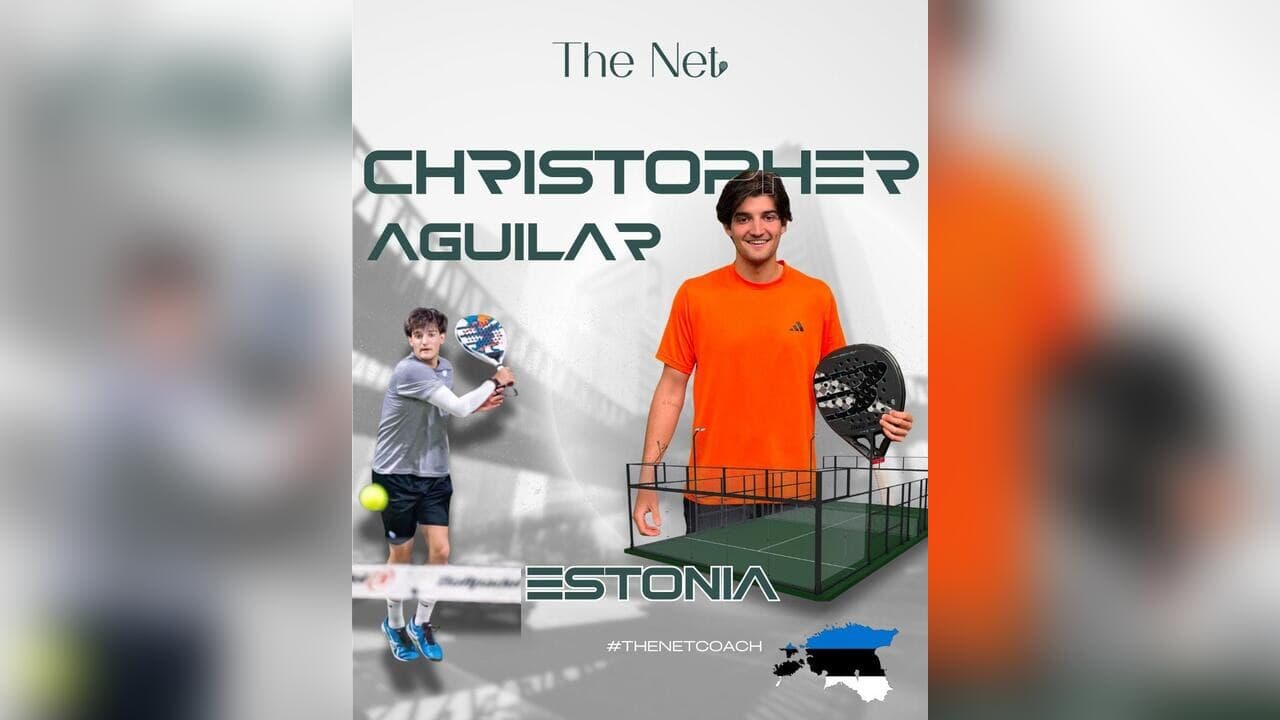
Christopher Aguilar applied to five clubs and all five replied. Five padel coach interviews later, two of them had made him an offer. He accepted one and was teaching in Estonia before the end of September. Three clubs spoke to a qualified, mobile, available coach and then let him go to somebody else.
He answered our questions in Spanish; the quotations here are translated.
"I had just finished my studies, and finding work in Spain did not feel like it was for me, because the salary was very low everywhere."
That is the supply side of this market in one sentence. Spain produces more qualified padel coaches than it can pay properly, which is why a club in Tallinn can interview a coach from the Spanish circuit at all. The competition for him was never other Estonian clubs. It was a Spanish job that did not pay enough to keep him.
Five replies, two offers, one week to decide
The timeline is the part clubs should read twice.
"I applied to five clubs and all of them replied, but only two sent me a job offer, roughly a week after the interviews."
A week from interview to offer, and then he was off the market. If your hiring committee meets fortnightly, you were never in this race. The three clubs that interviewed him and did not make an offer may have had good reasons, but the effect is the same as having no process at all: they spent the time, formed a view, and ended up with nothing.
Speed is not recklessness here. Deciding in a week on a coach you have watched, spoken to and checked is a normal amount of diligence. Taking a month to do the same work simply means somebody else makes the offer while you are still scheduling.
The padel coach interview that won was about the club, not the candidate
Here is what the winning club actually did on the call:
"We did an interview over a video call and we talked about the project they had and how I could fit into their school."
Read that again, because it inverts how most clubs run an interview. They did not spend the hour verifying him. They spent it explaining what they were building and working out loud where he would sit in it.
That approach does two jobs at once. It sells the role, which matters enormously when you are asking somebody to leave their country for you, and it is also the better assessment. A coach who can respond usefully to "here is our junior programme and here is where it is weak" is showing you how they think about teaching. A coach who can only answer questions about their own certificates is showing you a CV you already have.
If you want the structured version of this, the questions that actually separate coaches are in the interview questions that reveal teaching ability, and the broader criteria are in what to look for when hiring a padel coach.
What made him choosable was not his certificates
"I think in this case my playing level and my experience as a player in Spain were important in them choosing me."
Worth being precise about why that is valuable, because it is easy to mistake for snobbery about playing standard. In a market where padel arrived recently, almost no local candidate has grown up inside a mature competitive scene. Someone who has tells your members something your own coaches cannot, and gives your junior programme a reference point for what good looks like.
This is a real asset and it has a real price attached, which is the whole reason coaches are worth recruiting internationally rather than only locally.
He nearly did not apply, because of his English
"What scared me most, without a doubt, was my level of English, because I felt I had not mastered it."
He went into those five interviews believing his English was not good enough. Two clubs made him an offer anyway.
That gap should bother you, because the coaches it stops are invisible to you. They never apply, so you never know they existed. If your role genuinely needs functional teaching English and nothing more, write that in the listing in those words. If you need something closer to fluent, test it on the call rather than leaving candidates to guess. The one thing that costs you good applicants is saying nothing and letting them disqualify themselves.
Accommodation was the hardest part, and it is your problem
This is the most actionable thing in his whole account:
"Accommodation was the most complicated part, because people here do not usually rent out their house without meeting the tenant in person."
No amount of salary fixes that. A coach sitting in Spain cannot sign a lease in a country where landlords want to shake hands first, and no listing anywhere mentions this. A club that has hired from abroad before knows it and has a landlord, an agency contact or six weeks of temporary housing ready. A club that has not will discover it in week one, with its new coach inside the problem.
The emotional side settles on its own, which is worth knowing too:
"The first days were hard, accepting that you are far from your family and in another country, but the truth is that people here tend to welcome you very well."
Colleagues did that, not a policy. Still, the difference between a coach who lasts a season and one who lasts three is often just whether anybody took them to dinner in week one. The rest of that sequence is in the first thirty days of onboarding a foreign coach.
Where he is now, and what keeps him there
"I usually have private lessons in the mornings, and in the afternoon I have group classes with the school, both juniors and adults."
Mornings private, afternoons school. Standard shape for an indoor club in a northern market, and a full week.
What he volunteered about the facilities is the part clubs in newer padel markets undersell:
"What I like most is that all the clubs are quite recent and the facilities are far better than what I was used to in Spain."
Your courts are newer than the ones he trained on. Spanish padel is thirty years old and much of its infrastructure is first-generation, while yours was built in the last few years because it had to be indoors. That is a recruiting argument and almost nobody makes it.
Then there is the retention answer, which he gave without being asked:
"Thanks to working away from home you realise that you can make a living from this profession without depending on overtime or a very low salary."
A coach who has discovered that the job can pay properly is not looking for a way back. Read the other half of his answer as a club, though, and it cuts both ways: he also said he now feels capable of going anywhere in the world to coach. The first season abroad makes a coach more employable everywhere, not just with you. What holds them is progression and being treated as staff rather than seasonal labour.
What to change before your next interview
Christopher was available for about a month, and two clubs out of five moved fast enough to bid for him. Whether you get the next one comes down to three unglamorous things: someone answering applications, an offer inside a week of the call, and an answer ready when he asks where he will live.
Spend the interview describing what you are building and where the candidate fits, the way the club that hired him did. How hiring works for clubs covers what happens once a role goes up, and posting a role takes a few minutes.
Keep reading
Success stories
Hiring a padel coach before your club is built
A club in Jakarta signed a coach while its courts were still going up, and then the build ran late. Why hiring a padel coach that early can still work.
September 10, 2026
Success stories
How to hire a padel coach who is not looking for a job
A club in Japan hired a padel coach who was settled in Italy, and paid him less than he earned there. What it offered instead of money, and why that worked.
September 9, 2026
Success stories
A padel coach hire done well: one day to reply, fifteen to an offer
A club in Kuala Lumpur answered Ema Cura within a day, made an offer in fifteen and had his housing ready when he landed. Every step of it is worth copying.
August 31, 2026