


A padel coach hire done well: one day to reply, fifteen to an offer
A club in Kuala Lumpur answered Ema Cura within a day, made an offer in fifteen and had his housing ready when he landed. Every step of it is worth copying.
By The Net · August 31, 2026
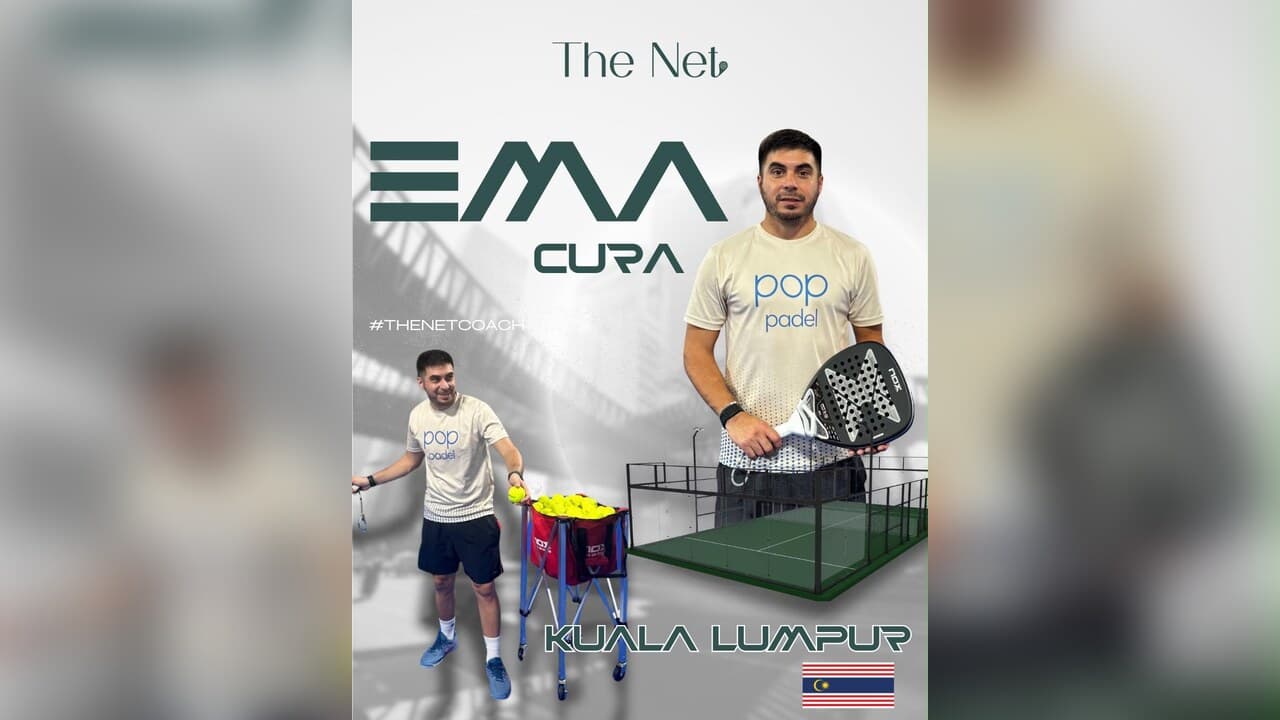
Ema Cura was coaching in Doha and wanted to move. The roles reaching him were all in the Gulf, and he was not sure about staying in the region, so he looked further out and applied to two clubs in Malaysia. Both replied the next day. One of them had him under contract fifteen days later, and he was teaching the day after he landed in Kuala Lumpur.
That club did almost nothing unusual. It just did the ordinary things quickly, which is rarer than it sounds and is most of what separates clubs that fill coaching roles from clubs that repost them in March. He answered our questions in Spanish; the quotations here are translated.
Both clubs replied within a day, and speed decided it
"I was lucky enough to apply to two clubs, and both replied the next day."
Two clubs, two replies, twenty-four hours. Whichever of them moved faster to a decision was going to get him, and one of them did.
This is the least appreciated part of hiring a padel coach internationally. Good candidates are usually in a job already, and the window in which they are actively willing to move is short. It opens when something at their current club irritates them enough and it closes when they either move or settle back down. A reply four days later often arrives after the window has shut, and you never find out you were in the running.
Set an internal rule of one working day to acknowledge any application, even if the reply is only to say when you will come back properly. It costs one person ten minutes a day and it is the single highest-return change most clubs could make to their hiring.
Two video calls and a contract
"I had the offer within 15 days. We did two video calls, after which they sent me the contract."
Two conversations. Then paperwork.
Clubs that lose international candidates almost always have longer processes than this, not shorter ones, and the extra stages rarely add information. A third call with a committee member who was not on the first two mostly re-covers ground and adds a fortnight while everyone finds a slot in their calendar. If you cannot say what a stage is testing that the previous one did not, it is delay wearing the costume of diligence.
Short does not mean casual. Decide before the first call what you are testing on each of them, and who signs off the cost. Fifteen days is achievable when the person who can say yes is in the room from the start.
They hired years, not a ranking
We asked why he thought they picked him.
"I think what made them decide on me was the number of years of experience, which was fundamental for the role they were looking for."
Read the second half of that again: fundamental for the role they were looking for. They were not buying experience in the abstract, they had a role that specifically needed someone who had done it before, and they knew that going in.
That is more discipline than it looks. Most job descriptions list every desirable quality and then the shortlist gets sorted on playing level, because level is the only thing on the list that can be ranked quickly. A club that has written down the one attribute the role actually depends on can choose on it, and can explain the choice afterwards. If you are still working out what to weigh, what to look for when hiring a padel coach and the interview questions that reveal teaching ability are the two places to start.
The house was ready
"The first weeks were about making myself a bit better known among the clients, playing a bit, getting to know them, building bonds. They were not difficult: I arrived at a well prepared club, the house was ready, and luckily they work in English."
Three things were already solved when he arrived: somewhere to live, an organised club, and a shared working language. None of the three is standard, and all three are cheap compared with what they buy you.
The housing is the one clubs skip most often, and it is the one that decides how the first month goes. A coach who lands without accommodation spends four weeks viewing flats during office hours, dealing with deposits in a currency and a legal system they do not know, and being generally unavailable to the members whose bookings you hired them to grow. A coach whose keys are waiting spends those same four weeks on court learning names. That is not a perk, it is the difference between a productive first month and a wasted one, and it is set out in full in the first thirty days of onboarding a foreign coach.
He taught his first lessons the day after arriving. That only works because everything else had been arranged in advance.
If you cannot outbid the Gulf, sell the ambition
"Compared with my previous jobs, this one is more ambitious professionally. They really want to grow as a club and grow the sport in the country."
This club was competing for a coach against a region that pays better. It won anyway, and that sentence is a large part of why.
Padel in Southeast Asia is early. For a coach that means more beginner sessions, more explaining the sport from scratch, and considerably more influence over how the programme is built than they would have at an established European club with twenty years of habits. Plenty of experienced coaches find that more interesting than a bigger salary in a mature market, and almost no listings mention it.
If you are a club in a young padel market, that is your actual pitch, and it is worth writing down in the role rather than leaving a candidate to infer it.
The line to take from this
Asked what he would tell himself starting over, he quoted a friend.
"Never forget why they brought you."
It is good advice for a coach. It is a better test for a club. If you cannot finish the sentence "we are bringing this person in to..." in one line, the job listing will not say it either, the two video calls will not test for it, and in eight months nobody at the club will be able to say whether the hire worked.
Write that line first. Everything else in this piece, the one-day reply, the two calls, the flat that is ready, is just execution on top of knowing what you are hiring for.
Where this leaves you
How hiring works for clubs covers what a role needs to contain and what happens once it is live. If you already know the position, posting it puts it in front of coaches who are looking now.
Keep reading

Success stories
The padel coach interview that wins: talk about your project, not their CV
Christopher Aguilar interviewed with five clubs in Estonia and two made him an offer. The padel coach interview that won him was a conversation about the club.
September 20, 2026

Success stories
Hiring a padel coach before your club is built
A club in Jakarta signed a coach while its courts were still going up, and then the build ran late. Why hiring a padel coach that early can still work.
September 10, 2026

Success stories
How to hire a padel coach who is not looking for a job
A club in Japan hired a padel coach who was settled in Italy, and paid him less than he earned there. What it offered instead of money, and why that worked.
September 9, 2026